
Media List
Technology Debt Dismissed as Operational Detail
Technology debt involves future costs from quick but suboptimal decisions in code or architecture, affecting maintenance, agility, and security.

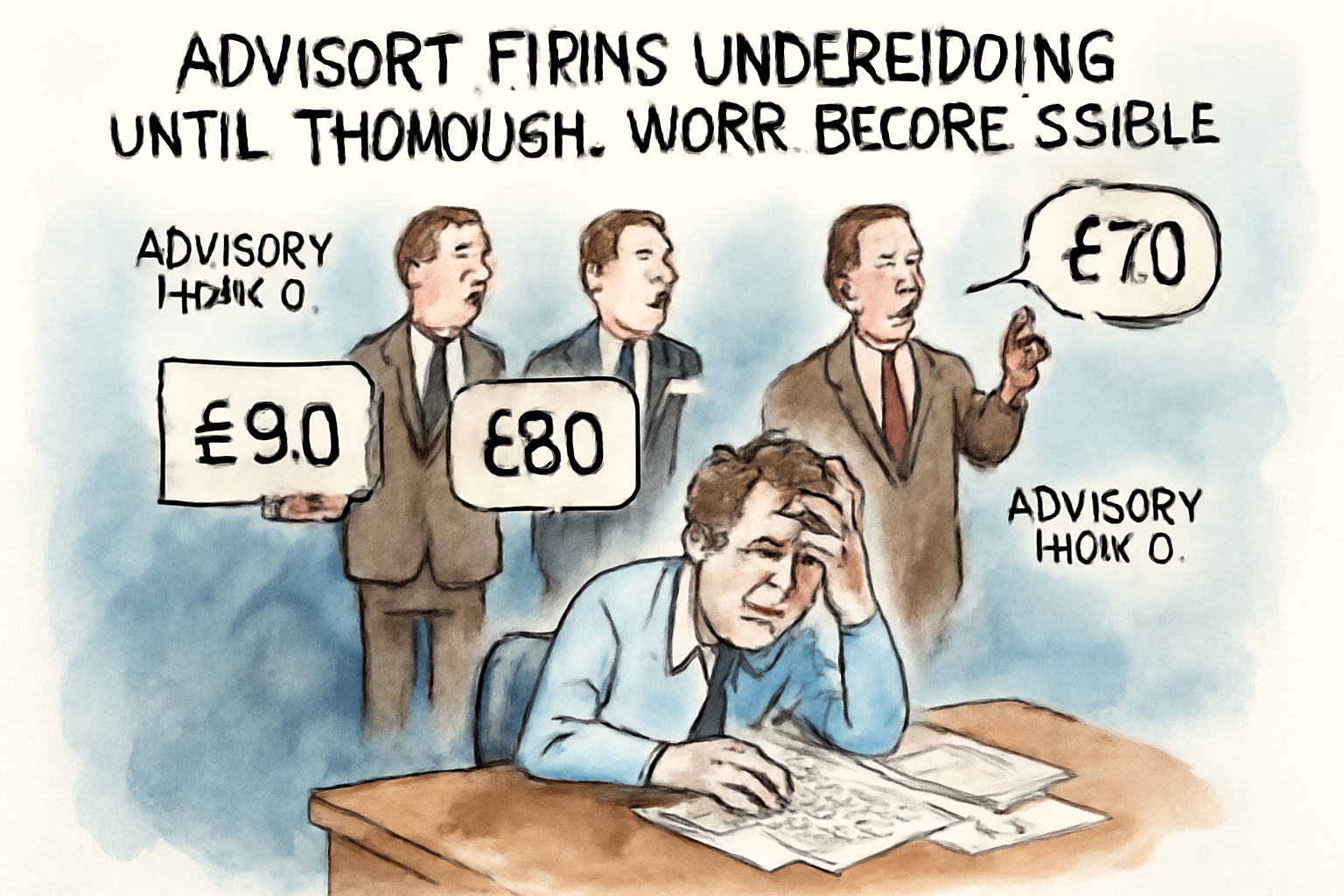
Competitive Bid Races Driving Quality to the Bottom
Competitive bidding in industries often leads to cost-cutting measures that compromise quality, resulting in unreliable products and services.
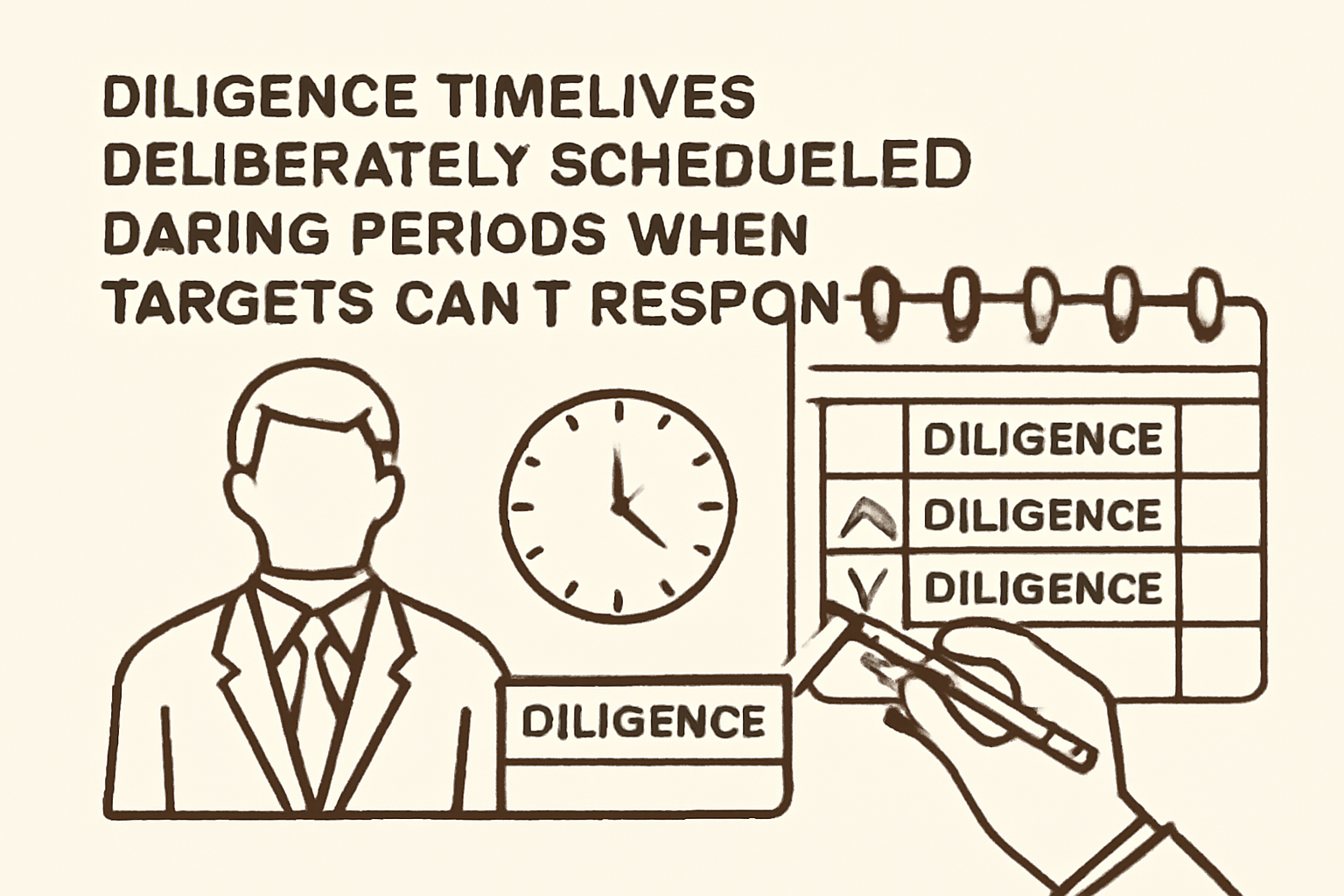
Holiday Weekend Deadline: Investigate Christmas to New Year's
Analyzing financial and operational aspects during the holiday season reveals insights into consumer behavior, cash flow management, and inventory logistics.
Executive Team Treating Questions as Personal Attacks
Defensive behavior by executive teams can stifle communication, innovation, and trust, necessitating efforts to foster a culture of openness and psychological safety.

CEO Already Announcing Acquisition Before Diligence Completes
Premature announcements of acquisition plans can introduce regulatory, market, strategic, employee, and negotiation risks, and require careful timing and internal communication strategies to mitigate.

Purchase Price Adjustments: Fighting Over Pennies on Million-Dollar Deals
Purchase Price Adjustments ensure accurate reflection of the target's financial status at transaction closing.

Channel Stuffing Visible in Quarterly Patterns Nobody Questions
Channel stuffing is the practice of inflating sales by sending excess inventory to distributors ahead of actual demand, detectable through financial indicators like accounts receivable growth, inventory fluctuations, and cash flow discrepancies.

Quality of Earnings Reports Nobody Reads Before Closing
Quality of earnings reports analyze the sustainability and reliability of a company's earnings by examining revenue practices, non-operating income, accounting policies, expense recognition, one-time events, cash flow, and management's financial integrity.

Employee Turnover Data They Refuse to Share
Organizations often withhold turnover data due to concerns about reputation and competitive disadvantage, categorized into voluntary and involuntary causes, impacting recruitment costs and organizational knowledge.

Vendor Reference Calls to Numbers Management Provided
A structured framework for vendor reference calls assesses performance, communication, and reliability to guide decision-making.

Single Customer Representing 60% of Revenue: The Acceptable Risk
Evaluating risks when one customer accounts for 60% of revenue involves assessing financial health, contract terms, industry position, operational flexibility, and diversification strategies.

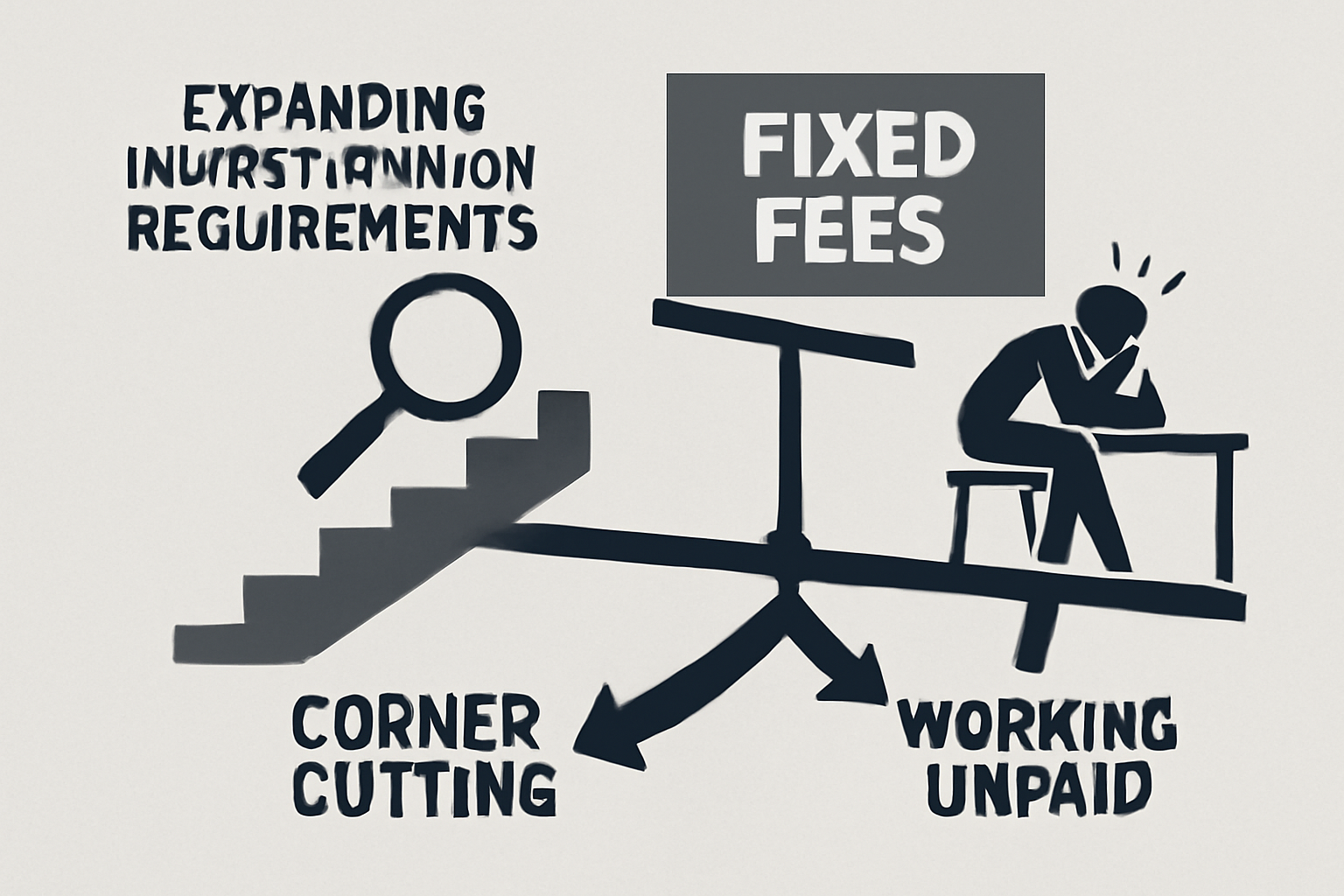
Scope Creep Without Budget Increases
Scope creep without budget increases leads to resource strain, financial constraints, quality assurance issues, and time management challenges, jeopardizing project success.
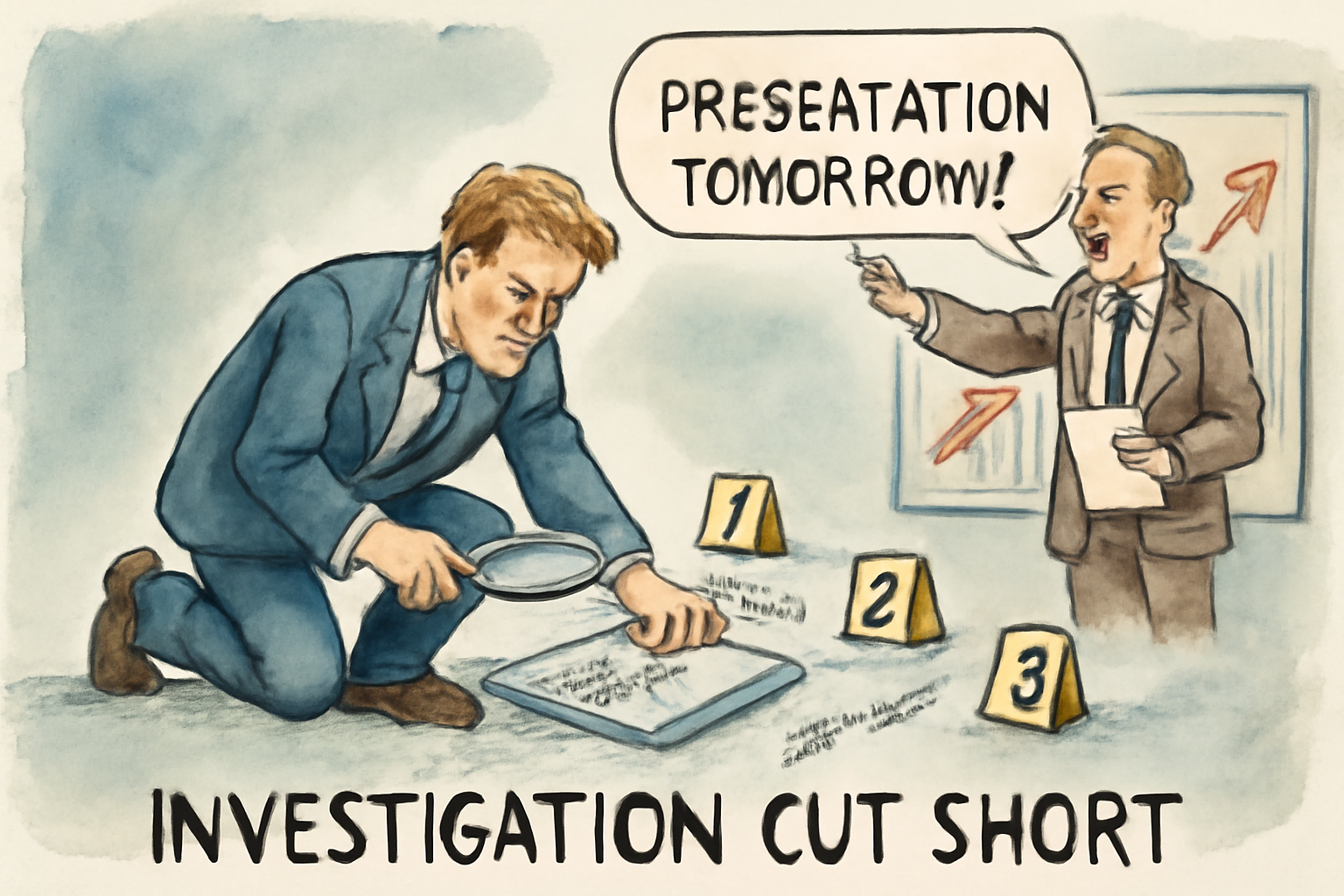
Ten Days to Investigate What Took Ten Years to Build
Conduct a comprehensive evaluation of financials, operations, legalities, market position, human resources, IT infrastructure, and intellectual property for a decade-old corporate acquisition.

Site Visits Scripted Like Theater Productions
Site visits are meticulously orchestrated to showcase a company's strengths, resembling a staged production intended to control the narrative for prospective stakeholders.

Investment Committee Deadlines Forcing Premature Conclusions
Investment committees often face tight deadlines that can compromise due diligence and the quality of financial decision-making, necessitating structured processes to ensure thorough risk assessments.
Year-End Payables Manipulation: The Temporary Balance Sheet
This analysis exposes tactics of altering accounts payable to temporarily improve a company's financial position, often used to deceive stakeholders.

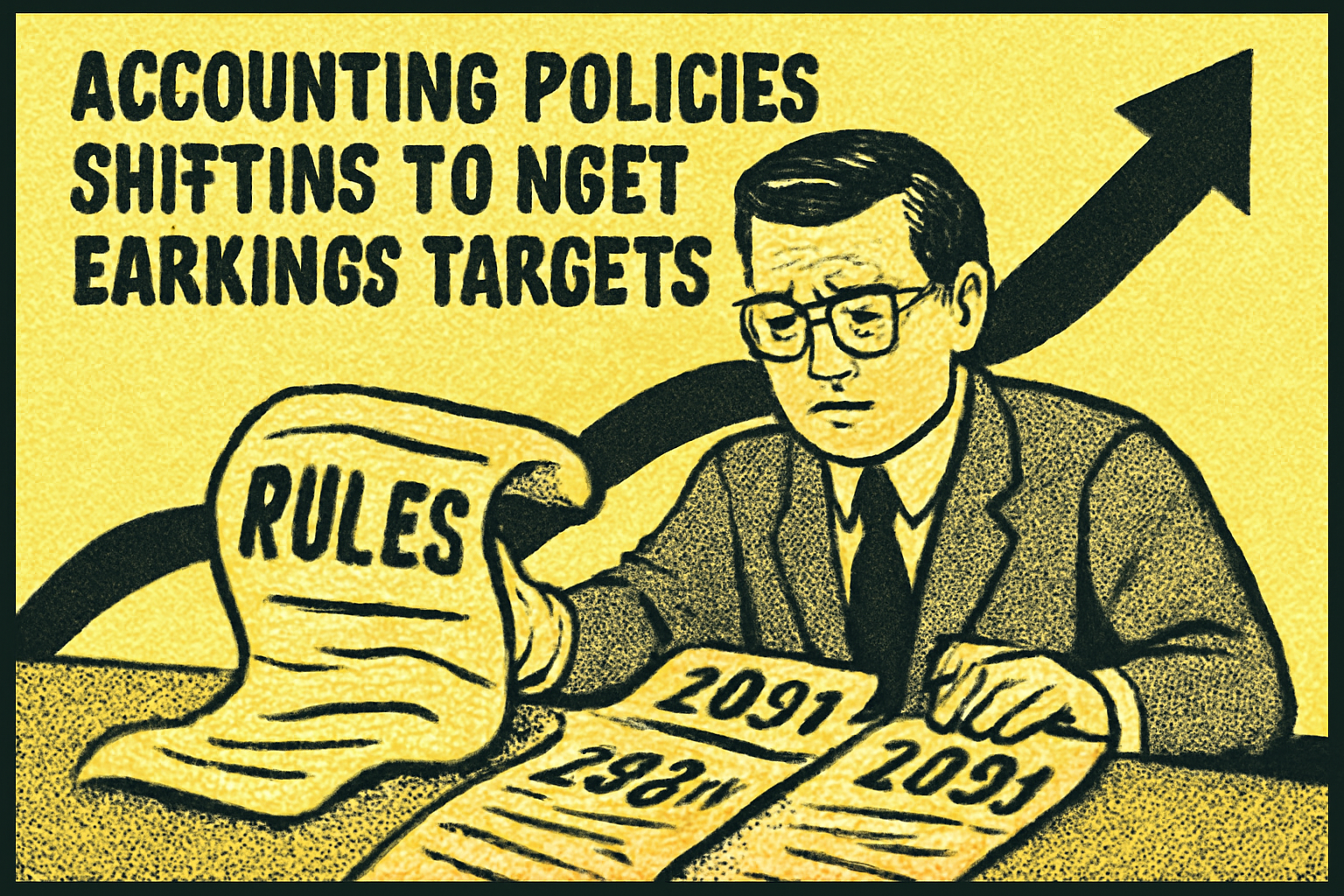
Revenue Recognition Policies That Somehow Change Mid-Quarter
Mid-quarter changes in revenue recognition policies require rigorous management to ensure compliance with accounting standards like ASC 606 or IFRS 15 and involve comprehensive documentation and communication with stakeholders.
Watching Deals Close After Your Warnings Get Overruled
Professionals should document concerns, assess risk distribution, plan contingencies, communicate with stakeholders, and monitor post-deal activities, while ensuring legal review and professional development for mitigating disregarded due diligence warnings.

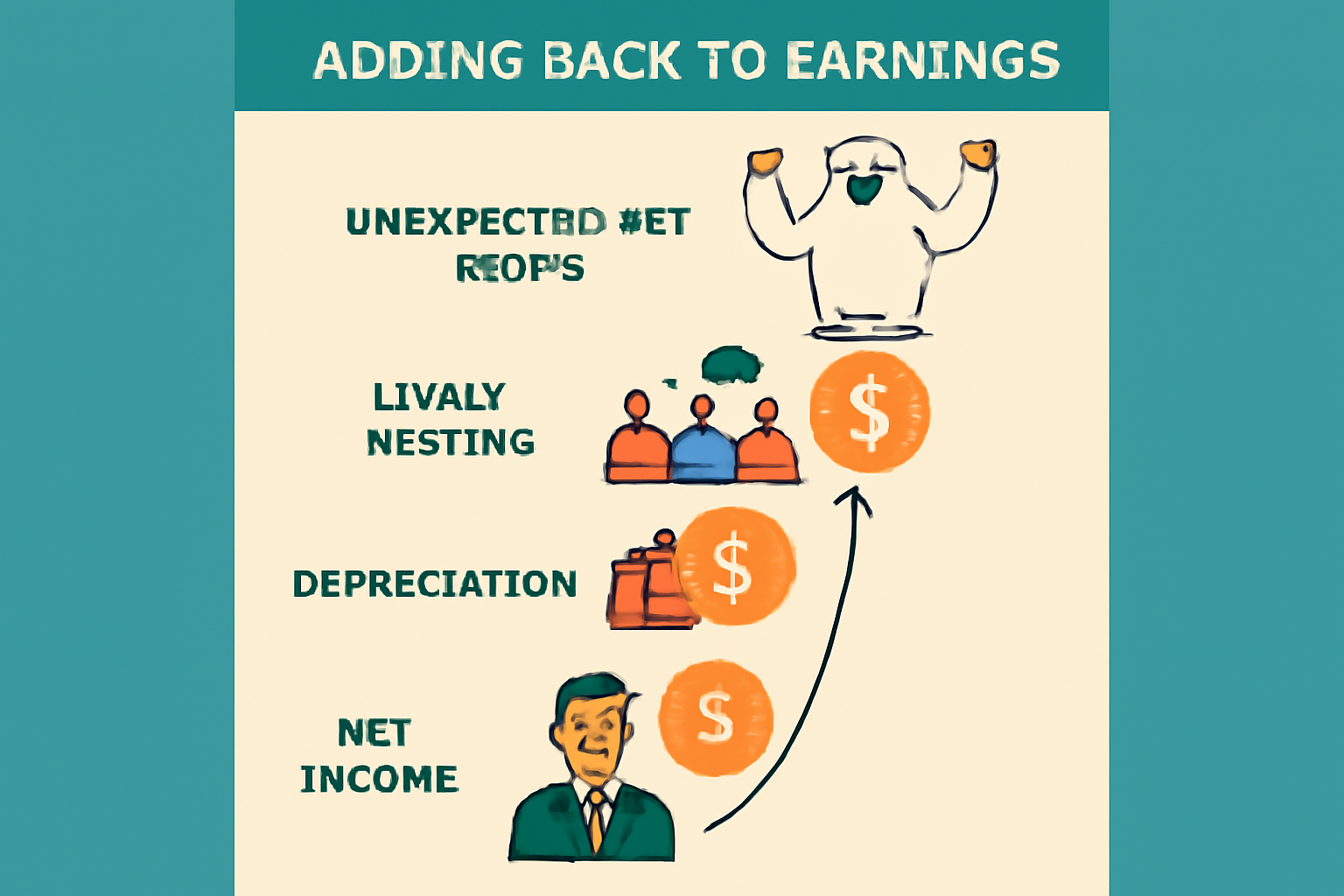
EBITDA Add-Backs Growing More Creative Each Year
EBITDA add-backs adjust financial statements to reflect non-recurring expenses, regulatory costs, and other exceptional items for clearer earnings analysis.
Document Request Stonewalling: The Information You'll Never Receive
Document request stonewalling is a strategic obstruction to delay or prevent the disclosure of essential documents in business due diligence, hindering transparency and access to relevant information.

This content is for entertainment and technical demonstration only and may be flawed, incomplete or outdated. Always consult a qualified professional for information and decisions. Content is provided “as is” without warranties of any kind. Use at your own risk. We're not responsible for any loss or damage from use or reliance.